Wednesday, January 18, 2023

The Godfather Coda: The Death of Michael Corleone Review

        This one is going to be interesting. Well, how could I explain that this movie practically upended what I wanted to do for the rest of this month. Originally, I was supposed to talk about The Godfather Part 3 and a new recut version that came out three years ago. So I searched through my various streaming services to no avail. With that, to wrap up my odyssey of viewing The Godfather series. Here’s what I think of the 2020 recut. 

1. Did There Really Have to Be a Third One?
        When you have two movies of a series be the best ones, it’s a Herculean task to come up with a satisfying story to wrap up the view of a complex man like Michael Corleone. Everything seemed to nicely end with the ending of Part 2, with Michael sitting alone pondering everything he’d done at that point. To me, sometimes it’s interesting to have the overarching story just have two parts. Since it feels like an obligatory fulfillment to create the final act. 
        So, you probably wondering with the big gap in time in terms of release, how and why did this film get made? From what I gathered; Paramount wanted to do a third one without the help of Francis Ford Coppola. He’d gone on to other projects in the 80s, but he suffered some financial problems due to one of his films bombing in the box office. In turn, he accepted Paramount’s offer of wrapping up the final chapter. 
        Since I saw the recut version instead of the original theatrical cut, it’s such a stark contrast of the prior two. Obviously, as I stated prior it’s a monumental task to shoot and create a story that is on par with the last entry. So much so that visually it looks so drastically different. And that’s not by accident since the studio practically slashed the budget of the film. Giving Coppola very little to work with. 

        With all that background context explained, here’s what happened. The film now focuses on Michael as he is bereft with grief over his killing of his brother. In acts of atonement, he donates to various charities and tries to distance his family from the organized crime. While attempting to find a new successor, he finds Vincent to become the new Don of the family. 
        In between all of that, we follow Michael’s daughter Mary’s exploits with Vincent. I’ll talk about that more in the next tab, it’s controversial in retrospect. I think what the film doesn’t do so well is that the story is kind of all over the place. It would’ve just been simple if it focused on Michael and Vincent as a simple passing of the torch, while also showing Michael’s past actions catch up to him.
        I think the film tried too much that it really made me bored watching the whole movie. Like, the thing that people go and watch the series is the overall chess like dialogue and betrayal within the family. Involving an abstract element like the Church unintentionally gives the series the jumping the shark moment. It’s just not that interesting since it’s supposed to tie in with the forgiveness that Michael is looking for. 
        If there’s anything good to say is that I enjoyed Vincent’s character. It’s uncanny that he nearly looks like Pacino. He has this ruthless energy where he actively kills the goons that is looking to off him and the Corleone’s. If there’s one scene where I like, it’s the one where he kills the burglars in his apartment. That whole moment goes to show his method to get the name of who’s trying to kill him. 

2. Other Reasons Why This Film Doesn’t Work
        Before I talk more about the symbolic “Death” of Michael, I must talk about Sofia Coppola. After the release of the theatrical cut of Part 3, the level of criticism to her was massive. People singled her out because of the supposed nepotism in Hollywood. And of course, her very bad acting. To be fair, this wasn’t the first time that she appeared in any of The Godfather movies. She was in the baptism scene in the first entry and with the crowd when Vito arrives in America. 
        Her acting chops is stale whenever she’s with Vincent or Michael. Like, I really wondered if Francis just didn’t bother with giving her direction of how to properly voice out the lines. More so that I have no clear rationale as to why there’s a subplot involving her love with Vincent. It’s explicitly stated that they’re cousins. Apparently, it was a custom that was allowed within the Sicilian community in the past. 

        In terms of story, it’s such a head scratcher since I know that it’s supposed to mirror the relationship between Michael and Kay in the first film. The key difference is that Michael was attempting to distance himself from the family, but ultimately becoming embroiled and ultimately being the new Don. This one is just underdeveloped and rushed, since there’s other story beats to follow where it’s in the back burner. 
        Lastly, let’s talk about the “Death” of Michael Corleone. I can at least apologize by stating that I spoiled myself by watching the ending of the theatrical cut. The way Michael dies is so unintentionally hilarious that I’m glad Coppola changed it in the new cut of the film. As the film’s subtitle states, Michael dies in the film, but not in the way that you think. He has yet another assassination attempt, but this time it hit someone he cares deeply. 

        This is the part where it feels decent since it involves the overarching story of Michael finding redemption and atonement for his past. As I talked about, he donates to various charities within the church and is warned that he must pay for his past sins. Leading up to the finale, where the family is seeing the play his son Anthony is in, it’s supposed to represent Michael when the play is about the death of Christ. 
        The way the assassination is played out is great since we see Michael in pain. How he cries and just belt it out is unnerving that you honestly feel bad for him. Regardless of what he did in the last films, that this moment is such a sad thing to see. 

3. Overall
        The Godfather Coda is an okay finale to a great series. In my opinion, it’s an unnecessary finale to a story where it already had a finale. 


Wednesday, January 11, 2023

The Godfather Part 2 Review

        It’s usually tough for a sequel to ever match or be better than the original film. There’s an expectation that a sequel is usually bad because it does the same thing. Or do something completely different but at the detriment of being a different film than what most people expected. The Godfather Part 2 is one of those sequels that breaks that perception of lower standard that it’s honestly tough whether to consider it either a superior film or an equal. 

1. Two Stories, 1 Film
        One would think that the this film would be the same thing story wise, but this time with Michael now in charge of the Corleone family. Well, no that’s not the film’s prerogative whatsoever. The movie literally feels like a continuation into what’s going on with Michael now gaining control and having no competition. Specifically, he and his family survive an assassination attempt and Michael is trying to figure out who set it up. 
        Now, that’s what we call story A, we can then transition to story B. Or in this case the flashback. One thing where I must commend the film is the overall use of its flashback. In any film of any measure, a flashback is used either sparingly or be what we see in the entire viewing. Sparingly when used to set up a plot device or to get another angle of the main story. Used in full like seeing an action at the very start then seeing what led up to it. I recommend watching Sunset Boulevard as an example.

        Anyways, the flashback moments to this film mostly focus on the rise of the Corleone’s. To begin with, everything that we see is through Vito’s point of view. As we see him being smuggled out of Italy and slowly being morphed into a don when he arrives in New York City. Robert De Niro does a great job of portraying the young version of Vito. There are moments when he doesn’t talk, and when he does talk, he almost pulls of the Brando accent. Not saying it’s perfect, but he manages to have that charm that Marlon had in the first film. 
        More so that when we see Vito already of age, we see him as just a simple man. Not until a neighbor and future ally tosses him a bag of weapons to hide is where he slowly moves to a life of crime. To me, the whole story feels like a revenge story. One where his family gets murdered in Corleone, Italy and he remembers the name of the Don when he visits him. Additionally, as he grows up in New York he creates a circle of trust and confronts the Don who’s dealing with racketeering. 
        So, one would ask, why have these two stories intersected each other? The one thing that may seem head scratching is the idea of having it be too conflicting. Since one would expect the flashback story ultimately set up what will happen in the present. Like a payoff or something to happen after watching the flashback. In an odd way that doesn’t happen here. For one thing, having the flashback creates the overall differences between Vito and Michael. Which I’ll talk about next. 

2. Differences Between Michael and Vito
        The family dynamics make the whole movie worth watching. Even though the movie clocks in at three hours, it never feels like it’s meandering or feel slow at all. Like seeing Michael just plan out among his closest allies on who exactly is trying to get him killed is the most interesting thing to see. When he conversates with the men around him, it’s like watching a chess match used with words. Fascinating to say the least, since he ultimately pull the strings to have anyone executed. 
        I think the best scene involving him is when he talks to his only surviving brother Fredo. While he’s older than Michael, he acts more like a goofball than a man with dignity and pride. Which makes the whole moment when Michael confronts him so captivating. I won’t give anything away, but the whole scene with the two of them in the Lake Tahoe compound makes it a must watch. And it shows just how Michael can think ahead and create a level of comfortability where he can see who’s on his side. 
        Conversely with Vito, I honestly see him as the literal exact opposite of the Don in New York. To me, it feels like Vito goes above the level of intimidation and tries to make amends to the people of the section of town who’ve been wronged. Particularly, the moment when he tries to help an evicted woman. Vito confronts the landlord and gives him the money in advance, and then his friends intimidate the person in question. Vito is more hands off as I see it. 
        With all that out of the way, I feel that the actual reason to have these two depictions of the family is to show just how Michael is a flawed Don than his father. The new leader of the family has his right-hand man assume control with what’s happening at home while Michael tries to find a mole. He sees everything as transactional at the expense of his own marriage slowly coming off the seams. Especially in those rare moments where he yells in frustration, where it shows that he’s just belligerent and not an understanding Don like his dad. 
        With everything that we see seen in the last film and in this one, it shows just much influence that Vito had and what made him a better leader. We see how much respect he wanted and cared about the mutual connection he had with the people going to him. For as much as he had people commit horrible acts, he was an understanding villain where he was likeable. 
        The one scene where it compounds it for Michael is near the end. After practically shelving his wife aside, Michael sits and remembers one moment from his past. He doesn’t want to pursue the family business and go do his own thing. It angers his family as they see it as a betrayal, but one where Michael wants to forge his own path. That whole moment sets up Michael as being a tragic figure and one where we’re a movie away from everything falling apart. 

3. Changed Reception
        One last thing to talk about, it’s always confounds me to see the reception change throughout time after the film is released. Don’t get me wrong, when a film is just bad, it’s bad forever. For this one, I can see where it can seemingly be inferior. Maybe the critics saw that the moments where Vito spoke Italian more than English, or that the lack of Marlon Brando didn’t make the film worth praising is another. 
        To me, it’s the inflection point of when exactly does the movie that has been received mixed critically, pivot to becoming an all time classic. The same happened with Star Wars: The Empire Strikes Back, it had a mixed reception, but slowly became the best Star Wars movie. I feel that it’s the new batch of movie critics or open minded movie goers gave the film a shot and felt moved that the film is superior to the first.

4. Overall
        While I didn’t delve more into the film, it’s an absolute must watch. I strongly recommend watching it after you watch the first Godfather


Wednesday, January 4, 2023

The Godfather Review

        It’s a whole new year now and I’m going to do something differently this time. If you’ve been following me for about two years now, every January I talk about failed franchises. From the DCEU movies of the past to The Matrix series. This time, I’ll be talking about The Godfather series. And it’ll come as a shocker that I haven’t seen either of them. So think of this as a gateway to why this franchise has been a classic. With all that out of the way, here’s The Godfather

1. The Corleone Family
        Take it from me that this is my first Frances Ford Coppola film that I’ve seen so far. He’s part of the illustrious group of directors that came out during the late 60s to the 70s. All of them have changed cinema and filmmaking. Additionally, the era suited with newfound level of violence that can be shown on a silver screen. Trust me, this film doesn’t shy away from that at all. 
        Anyways, you would think this film would be about the rise or fall of the mob family. It’s far from that assumption. Instead, the story is mostly about the family as it transitions from one Don to another. The main highlight of the story is seeing the camaraderie between the family and how it operates. Obviously, the best representation of this is in the beginning as the Corleone’s are celebrating a wedding. 
        We see the behind-the-scenes dealings that Don Vito is in the veil of darkness. All the while, everyone is celebrating the wedding of Vito’s daughter. It’s such a great contrast between what’s being shown and what’s going on. Making it more malevolent is that a select few go to the Don and ask for a favor to help with their problems. This leads to one of the film’s best, horrifying or offensive scene. Depending on who you ask.
        To begin with, the singer at the wedding Johnny Fontane asks Vito for help in making it in Hollywood. Vito then sends his second in command to have the producer get Fontane into more movies. This is when we get to see that infamously famous shot. I love the overall setup within the shot. The music overall is gentle when it starts, and it gets more menacing with the producer realizes what’s under his blanket. 
        I think the scene perfectly represents just how far the mob families go as far as getting what they want. For once, it never shies away with getting their hands dirty or being deceptive for their own gains. And that’s what makes this movie such a classic as far as storytelling. We see just when Vito gets injured, everyone within the family thinks the next step for retribution. This is where Michael fits in. 
        Just before I talk about Michael, I really want to talk about the representation that the movie has going for it. To put it into context, people usually think of mobsters as one dimensionally malevolent. The film broke ground by making a crime family appear to be empathetic, when to be clear aren't. Even showing just how Italian they were, by showcasing the family dynamics. That's what makes the Corleone's so interesting since Vito basically controlled everything. And setting up how Michael will run the family. 

2. Michael’s Story
        There’s probably no actor who had an early successful run than Al Pacino. I mean there probably hasn’t been or will be another actor/actress that will have a critically acclaimed career opener than Pacino. I can sing praises all I want about him, but his role as Michael steals the entire show whenever Vito isn’t on the screen. 
        What makes him so fascinating is that he starts as the odd one out. It’s established that he wants to have a normal life that has no association with his family. With circumstances happening, he’s thrusted into a role where his father thought he’ll be in other powerful positions. All that goes to the wayside when he’s slowly being morphed to be the new Don. It’s honestly an interesting thing to see as his character change and do the acts that’s beyond him. From him committing a murder and marrying an Italian woman in Sicily. 
        That whole scene of him being in Italy is practically the best moment in the entire film. With Michael seemingly making a new life in Italy to let off the heat from the rival families. He has his humanity when he marries the woman Apollonia, and I believe sets him up to be untrustworthy when he doesn't reveal that detail to his actual wife. As a side note, some of the deaths are effective. Especially with the way that the film goes about it. None more when that moment when Apollonia gets killed. That's the turning point when Michael now becomes the Don. 
        I think the best scene that perfectly captures his whole evolution is in the baptism scene. Seeing the baptism of his godchild intersperse with his family’s hitmen is a perfect side by side of what kind of life Michael is now going to be living. It’s ironic and simply cathartic seeing the other Don’s being eliminated while Michael is already getting accustomed. 

3. Legacy
        Without a doubt this movie had an influential impact as soon as it came out. Just before the film, the book was already successful by being in the best sellers list for weeks when it was published. In fact, the author Mario Puzo co-wrote the screenplay with Coppola. One of the few instances where the author had a hand in the adaptation.
        When it came out, it was the highest grossing movie. So much so that it became successful Awards wise when it won a slew of awards including Best Picture. No one would’ve imagined just how much the people wanted to see more of the Corleone family. The sequels came out in later years and have been successful. Don’t worry, I’ll talk about them later this month. 

4. Overall
        The Godfather is considered one of the best films ever to be made. Need I say more?


Tuesday, December 20, 2022

The Polar Express Review

        Finally, I will get off my butt and talk about a holiday movie. This one is interesting in terms of its age. I’m starting to see that its reaching that apex of becoming a holiday classic and also having its critics. Don’t worry I’ll go easy on it. Any time I go to either Target or Wal-Mart, I see the DVDs on sale alongside the older holiday movies. And of course, I’ll talk about its divisive computer animation. 

1. The Children’s Book Adaptation Dilemma
        Something I’ve noticed whenever a short children’s story is adapted to film, is that the source material is usually short. So, the problem is how do you stretch out a story that’s approximately 30 pages long to a feature length movie? Simple, expand on the elements of the characters so that it at least follows the essence of the book. 
        Well, that’s the not the case for this movie. This is the first instance with any movie that I saw at a young age where the main characters don’t have an actual name. While it’s not a detriment in of itself, I think it’s one of the flaws for the movie. And to the book’s credit, the character’s didn’t have any names as well, so there’s that. In terms of story, a young boy is invited to board The Polar Express to see Santa Claus in the North Pole. 
        There’s some level of depth for the boy. It’s explained visually that he doesn’t believe in Santa. He has in his collection articles and magazines of mall Santas being exposed as fakes. So, he joins to see if St. Nick is indeed real. What’s interesting is that the boy is that two actors portrayed the kid. Josh Hutcherson, you might know him from The Hunger Games trilogy, did the motion capture. And Daryl Sabara, who was in Spy Kids, voiced the kid. 

        One thing I want to mention is that Hutcherson was in another movie that was adapted from the author’s work. He’s in the movie Zathura, a severely underrated movie and I personally think is better than Jumanji. The latter whose author also worked on this movie’s source material. 
        Anyways, since the whole story is about as simple as you can get. There are moments where there’s tension. Such as the train speeding too fast and one of the characters forgetting their ticket. During these moments, it feels like something that is attempting to show off the animation. While appreciative and to me just interesting with how many hours it must’ve been working on it. I feel that it gives a movie too much padding and tension.
        Like duh, the moments feel like a theme park. With the camera zooming by and seeing the level of attention in the animated details. It didn’t bother me when I was younger when I found it engaging. Nowadays, I kind of just wanted to be like get to the point. At the same time, it gives the movie more since the kids can be bland.

2. The Uncanny Valley
        Aside from Tom Hanks stealing the show by portraying three characters in the whole movie, the main point of contention of the movie is just the animation. To put it into context, this is Robert Zemeckis’ second film dealing with animation. His first Who Framed Roger Rabbit changed animation and special effects. This one is no exception, but the way it went about it is off putting. 
        This style of computer animation is called motion capture. How they do it is that the actors wear a suit that has sensors that a computer detects. They then act and their entire movement is recorded to be animated. Back then, the closest equivalent is a style called rotoscoping. Which is a film or a piece of film that is drawn to have a distinct style. 
        With that, the animation can be beautiful at times. Especially the shot of the train stopping in front of the boy’s house. The kids and pretty much anything looking human just looks odd. It’s what’s dubbed the uncanny valley. Anything that looks life-like but the dead giveaway is the eyes. The kids have it worse. There’s a moment where the girl is scooting closer to the boy, but the way she looks appears older than what they’re going for. Don’t even get me started on the elves.
        This is the first film where Zemeckis started his short-lived animation studio Image Movers. He dabbled some more with this style of animation with his adaptations of Beowulf and A Christmas Carol. Progressively they got better, but the baggage of motion capture also followed. It would be years later when the Nickelodeon film Rango, with its motion capture but having animal characters winning the Academy Award for best animated feature. 

3. Legacy
        As I mentioned earlier, this film is starting to begin its classics phase whenever the holidays roll around and the numerous copies appear on the shelves. Surprisingly, there’s been moments with Amtrak and other countries equivalents where they had trips centered around the whole story. The U.S., Canada and the United Kingdom’s train stations all had at one-point trips that commemorated the story. As of now, I don’t believe that they do it anymore but I could be wrong. 

4. Overall
        This film’s enjoyable and for a while the animation didn’t creep me out. Though it lacks any sort of character depth, or just caring in the grand scheme, it’s fun for just this holiday season. 


Monday, December 12, 2022

Uncle Buck Review

        This is probably the hardest month I have to do now. In case you haven’t seen any of my reviews from the past, I’ve practically covered some of the best holiday movies. And that’s gotten me thinking, what now? Well, it took awhile of twiddling my thumbs and I’ve decided to look at an underappreciated John Hughes film Uncle Buck. It’s not Christmas, but it’s in the winter. So close enough. 

1. Buck
        After the success of Planes, Trains and Automobiles, it only made sense for John Hughes to bring back John Candy in another film. Well, it wasn’t the first time where the John’s had collaborated again. The first instance was in National Lampoon’s Vacation, albeit Hughes was the screenwriter and John Candy appeared near the end of the film. 
        With that, the film is mostly straightforward and including the many hallmarks of the typical John Hughes movie. You can call them motifs, but it’s simple to spot. The film takes place of all places Chicago, in a somewhat fancy neighborhood, and the non-diegetic music sounding like Vangelis. Hell, the various sports teams have to show up.
        Anyways, we see Buck being called in by his brother. There’s a family emergency and Buck is tasked with house sitting and taking care of his nieces and nephew. From there, we get to see him slowly changing himself from a slob to a responsible person. Candy does a good job for portraying the uncle. I think what sells him is that he has that awe-shucks persona, with a no-no sense feel.
        The scenes with him and the kids is heartwarming. I think the best moments is when he goes head-to-head with his older niece Tia. From the start, we see her being upset about living in Chicago instead of Indianapolis. She’s the rebellious one and the one that only John Hughes could write and direct. We see that Uncle Buck manages to hold his own when he gets in Tia’s skin. 
        More importantly, his whole character arc or when we see him from the start to the end is kind of interesting. The thing going against him is that people have a notion about him being a slob and a gambling man. Especially, since he has a woman in his life that doesn’t trust him to be committed to a relationship. Which prompts him to act like a dad to his younger niece and nephew. 
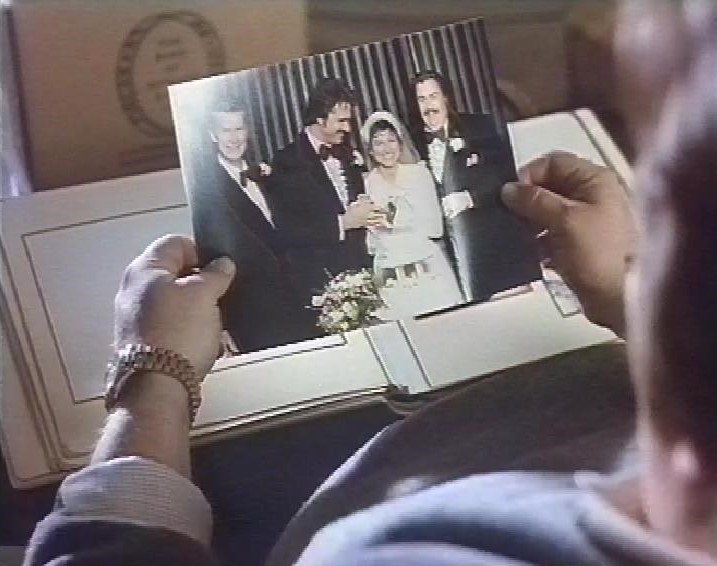
        The one problem that I have with the film is that I think the film would’ve been interesting if it explored more on his background. There’s one scene where he sorts through his brother’s marriage album. Buck sees a picture where his profile is folded to fit into the page. I think it shows just the level of uneasy that he had with his family. To me, I think it would’ve been explored more but the film would’ve gone longer. Personally, that scene showed just how much Buck had to do to change his image. 

2. John Hughes’ Waning Quality
        Another thing about watching John Hughes’ films is that you start to notice that the level of quality started to slowly go towards mediocrity. He certainly hit his apex with hits like The Breakfast Club and Ferris Bueller’s Day Off to name a few in the 80s. From the late 80s to the 90s is when you start to see the shift. It’s mostly attributed to him going back to his screenwriter position. While he did write Home Alone, I consider that one to be his last great project. That point forward you had loads of bad movies where it seemed like the level of quality was just appalling.
        So, what does Uncle Buck have anything to do with that? Well, I can certainly see it as a film where it’s the beginning of the drop in quality. For one thing, there are moments where it feels cartoony sometimes. Like that one scene with Buck and the clown acting like a drunk. The whole thing could’ve ended with just one punch. Having the character shake his head like a toon just feels off. 

3. Overall
        Uncle Buck is an underrated film that is sandwiched between John Hughes’ great films. It’s a good watch for seeing the late comedian being a great Uncle. 


Mission: Impossible - The Final Reckoning Review

          I just want to straight up apologize for the extremely inconsistent schedule for this franchise. I usually plan ahead, but persona...